

Ama su kooł – happy New Year!
January 1st marks the new year in the conventional calendar – but for the Ts’msyen (Tsimshian people), the new year traditionally starts at Ha’lila̱x six’ẅa̱h [ha/’li/la̱x/si/*’ẅa̱h] – the time to harvest eulachon, the month of March. Ha’lila̱x six’ẅa̱h

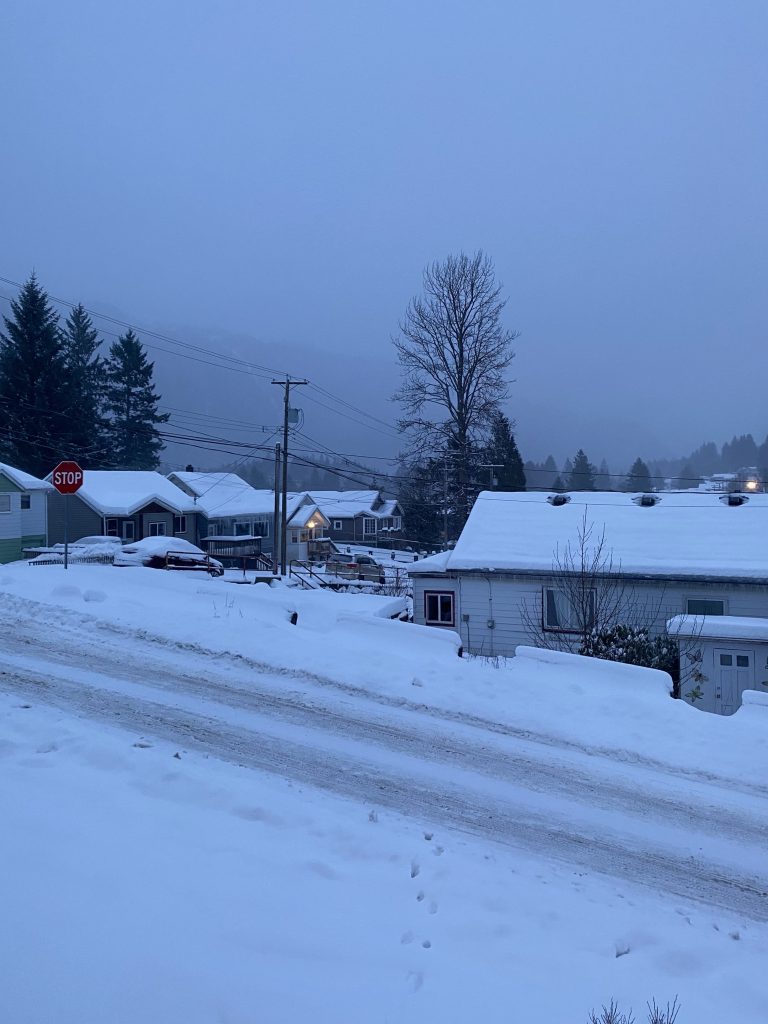
This year on New Year’s eve (December 31), we made a big batch of seafood chowder, enough to deliver a batch to each of our parents households. I’m not going to lie, I kinda felt like ‘Wii Iimx [‘wii/*iimx] – Santa Claus (literally “large beard”) delivering hot soup on a cold, dark, snowy night! Lol
Mr. Campbell was kind enough to provide the above translation for seafood chowder, sagayt łwa’elsgm sanaasgm amgyiika – meaning a “mixture of fish and shell fish, sianaas means flour added in while cooking.” However, I think “seafood chowder” is one of those words that isn’t typically translated in conversational Sm’algyax.
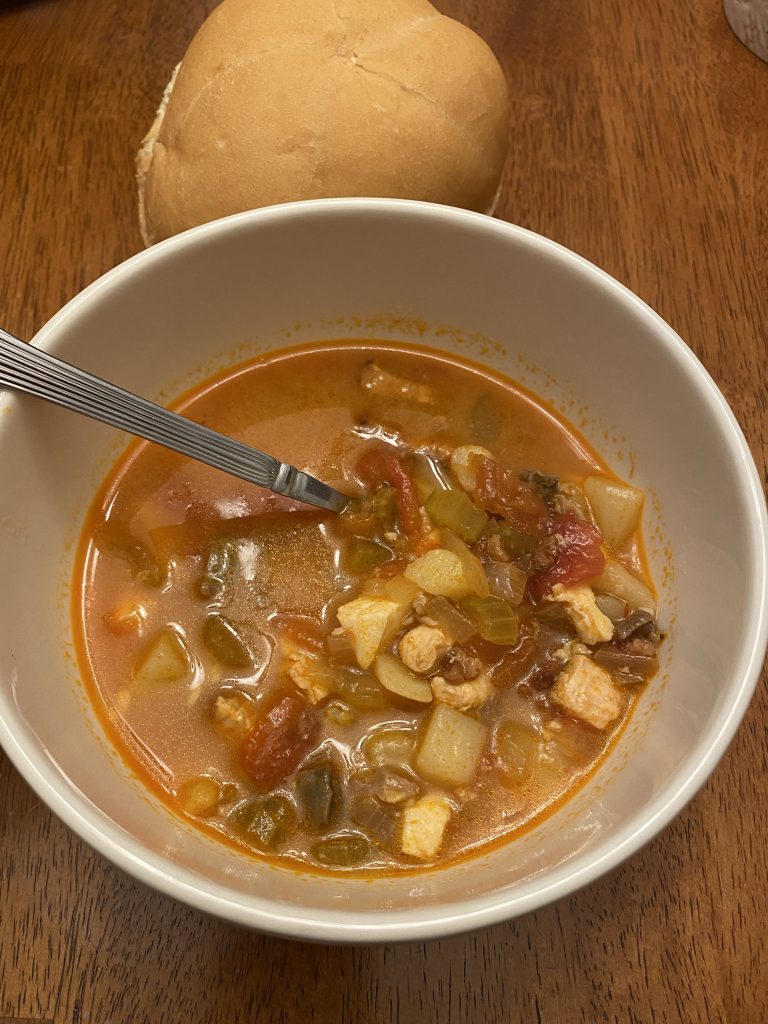
In the realm of chowders, there are a lot of variations to choose from! Chowders are essentially a type of soup/stew, that can be cream based or a clear broth, and are thickened with flour (or even crackers). They can be vegetable based (think corn chowder) or meat based (including seafood).
Clam chowders are a popular chowder, which uses ts’a̱’a̱x [ts’a̱’a̱x] – clam as the main ingredient, with limited vegetables to compliment the flavour. Below are a few common styles of clam chowder you may see on a restaurant menu:
- New England clam chowder – creamy chowder with milk/cream, clams, potatoes, butter as the main ingredients
- Manhattan clam chowder – a non-creamy chowder with a tomato base and may include celery and carrots in the recipe
- Rhode Island clam chowder – a brothy chowder, with no cream and no tomato in the broth. Last year we made a clear broth seafood chowder, which I loved. 😍
- Long Island clam chowder – is a dairy and tomato based chowder, combining elements of the New England and Manhattan style chowders (broth is more of a pink colour)
My lactose intolerance prevents me from enjoying creamy chowders, so my preference is a broth based chowder. Seafood chowders can be either creamy or brothy. We made a seafood chowder, which, like Mr. Campbell’s translation above captures, is a combination of fish and shellfish, thickened with a bit of flour.
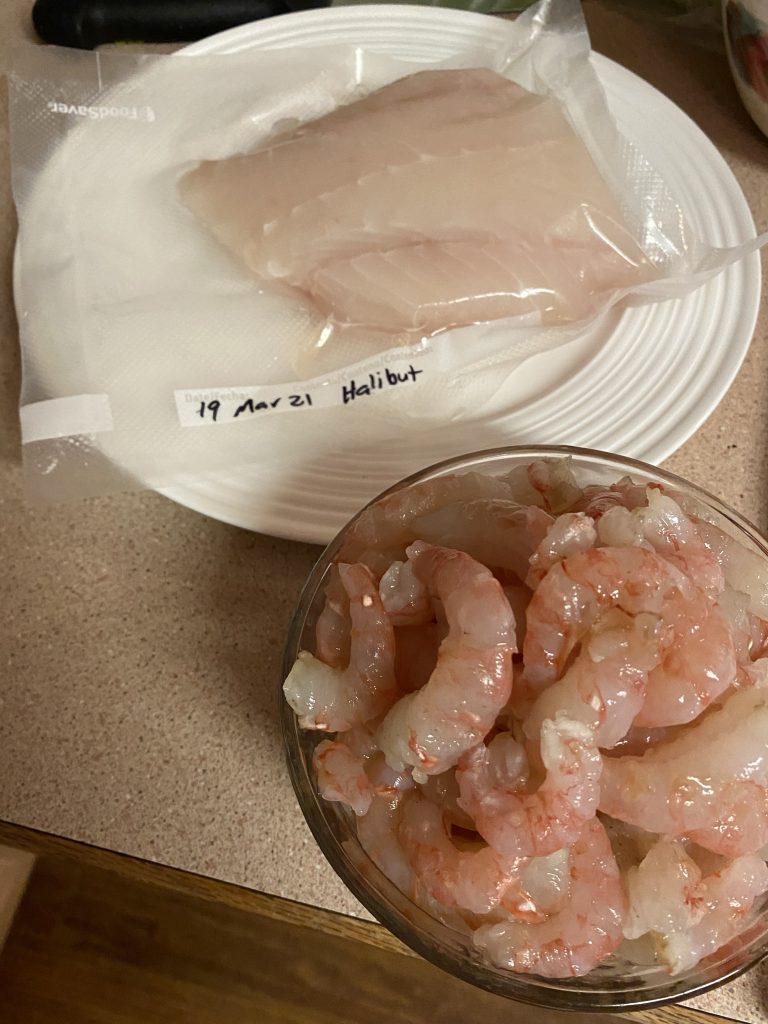
The main proteins we used for this seafood chowder were ts’a̱’a̱x – clam, xmasgm buwel – spot prawns
sagayt łwa’elsgm sanaasgm amgyiika – seafood chowder
This recipe makes enough for a large soup pot, feeds 10-12 people.
Ingredients:
- 1 yellow onion, diced small
- 7-8 stocks of celery, diced into small bite size pieces
- 2 teaspoons of minced garlic (we used pre-minced garlic from a jar)
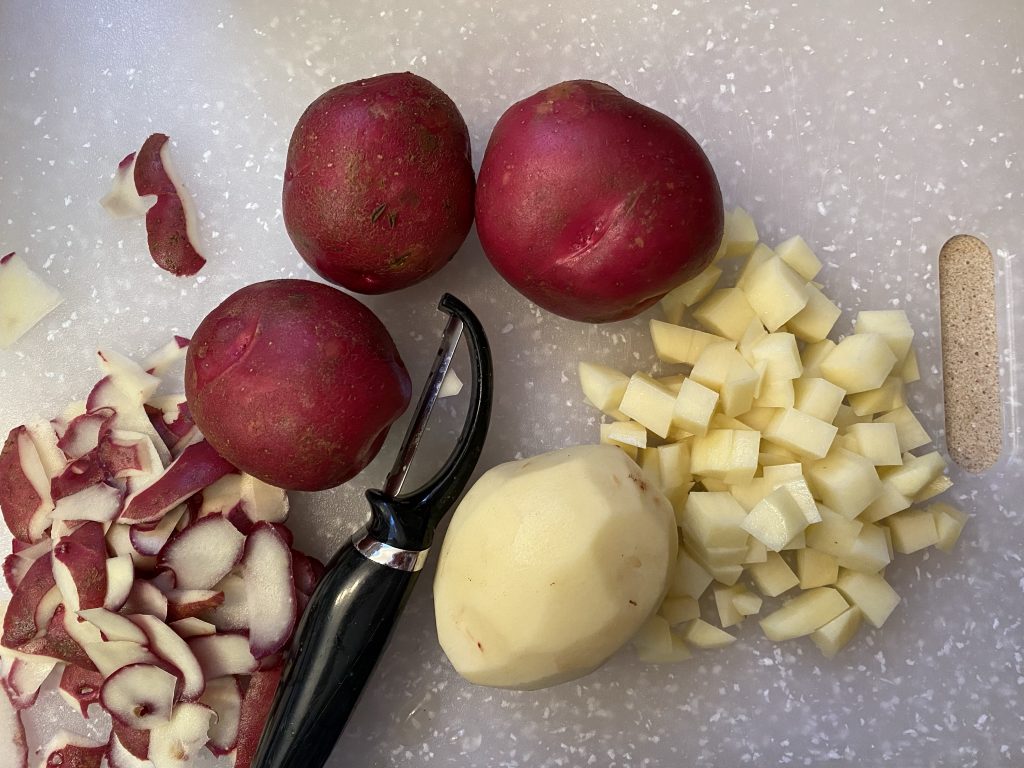
- 7-8 medium potatoes, peeled and diced into bite size pieces
- 2 table spoons of flour
- 4 table spoons of butter
- 6-8 cups of water (we added as we went along)
- 2 cans of clam nectar
- 1 cup of chicken stock (if you boil the collars with the heads in the fish stock, you may not need this ingredient)
- 1 can of diced tomatoes
- 1 can of tomato paste
- Seasoning, as you desire – we used chili flakes, salt, pepper and Old Bay seasoning

Fish stock:
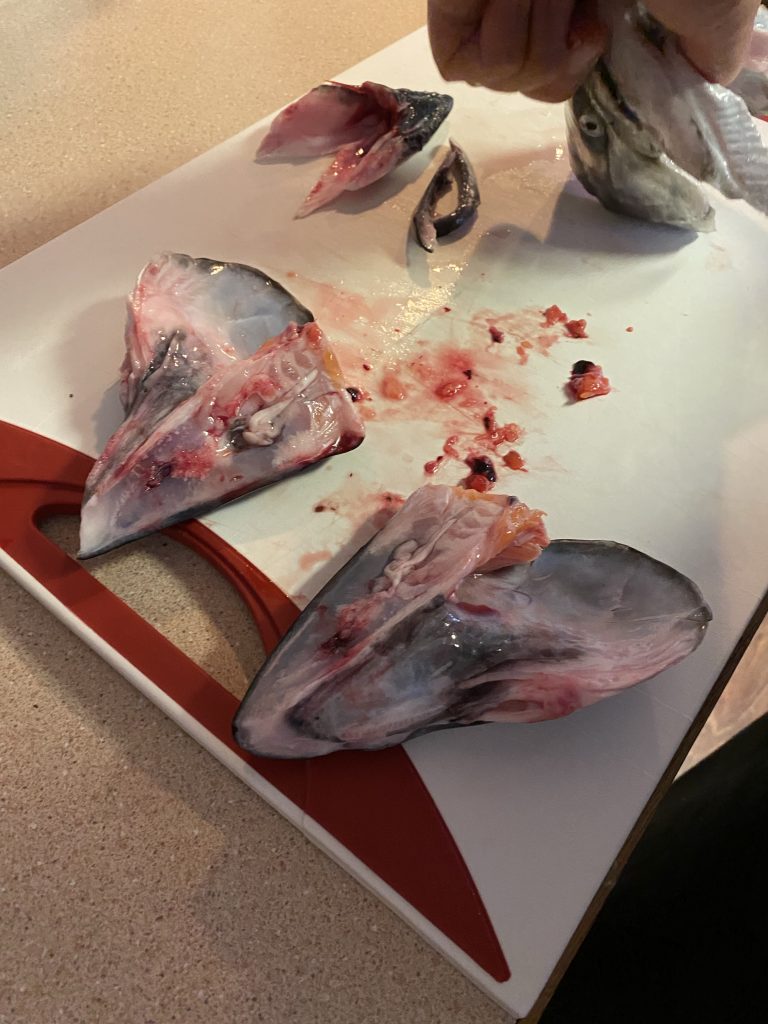
- 2 spring salmon heads, butterflied with the lips and lower jaw removed. If you don’t have salmon heads on hand, collars would also work
- Tops and trimmings from the celery and onion, set aside to make the fish stock (see photo below)
- 4 cups of water
- Your preferred seasoning to taste (optional)
Meat
- 4 cups of frozen clams, diced while half thawed (this makes it easier to dice the clams)
- 1 lb of peeled prawn tails, chopped into bite size pieces
- 2 lbs halibut, cubed in 1-2cm cubes
- 2 lbs winter spring salmon (we used the tailpiece to avoid bones), cubed into 1-2cm cubes
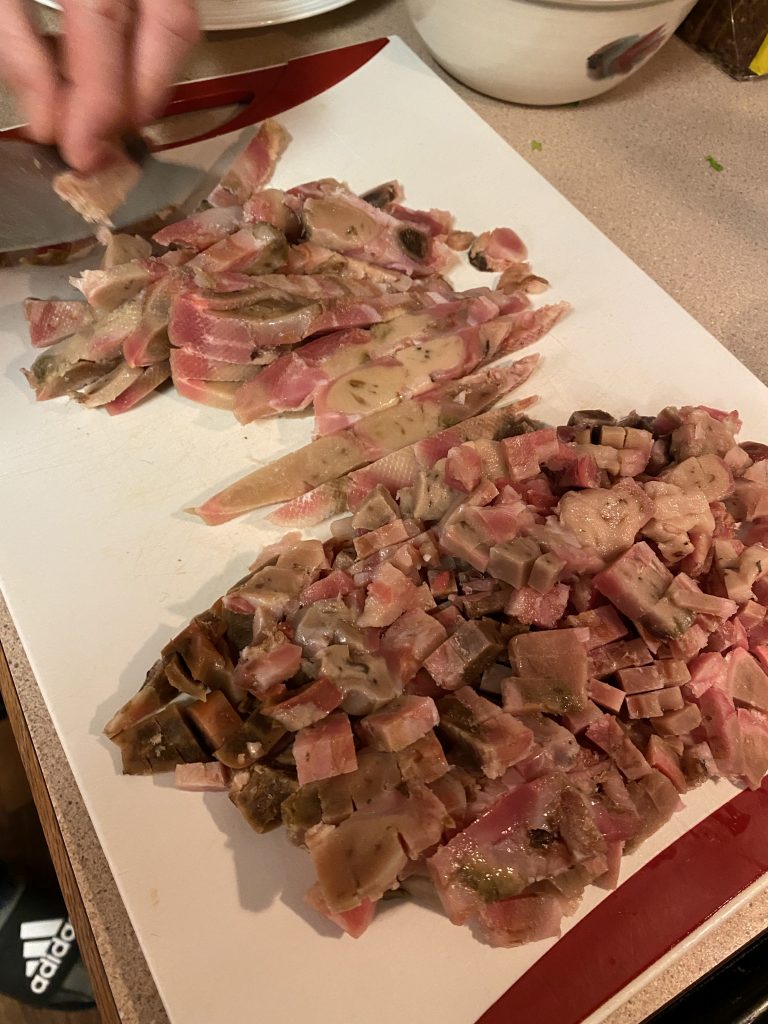
- 5-6 slices of tick cut bacon, diced into bite size pieces and pre-fried. Once cooked, you can cook and blot them on paper towel
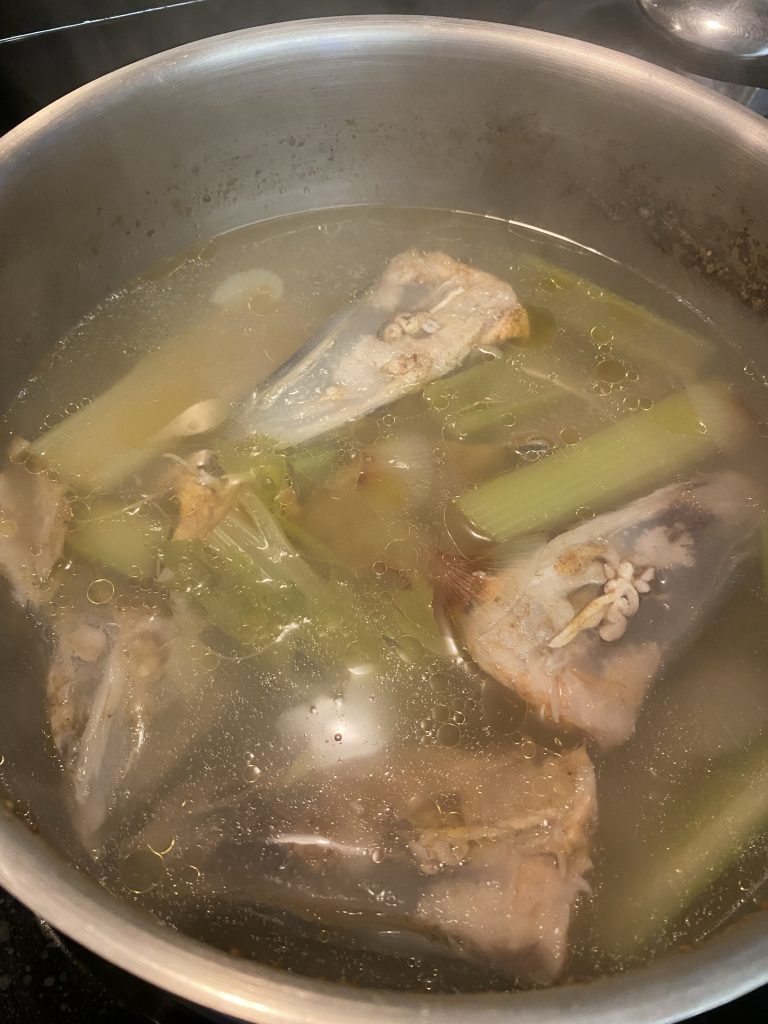
1. Steve started off by making the fish stock. He added the butterflied fish heads, celery stock, seasoning and water in a large side pot, and brought it to a low boil. Continue this for 30-45 minutes. It’s a good idea to start this first, while you prep the rest of your soup.
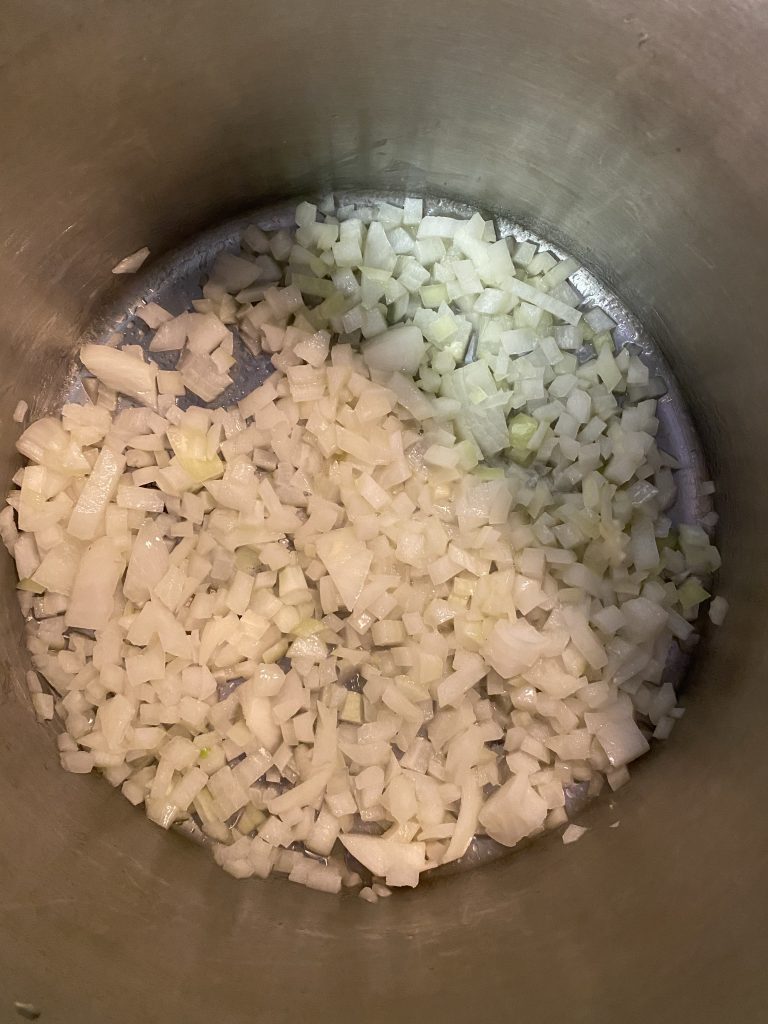
2. On medium heat, add butter and onion to the bottom of the soup pot until onions are translucent.
3. Add garlic and celery, warm with the onions for a minute, and add the flour. After warming for a minute or two, add the water, potato, clam nectar, chicken stock, diced tomatoes, tomato paste, and fish stock from the side pot (less the boiled salmon heads and celery).
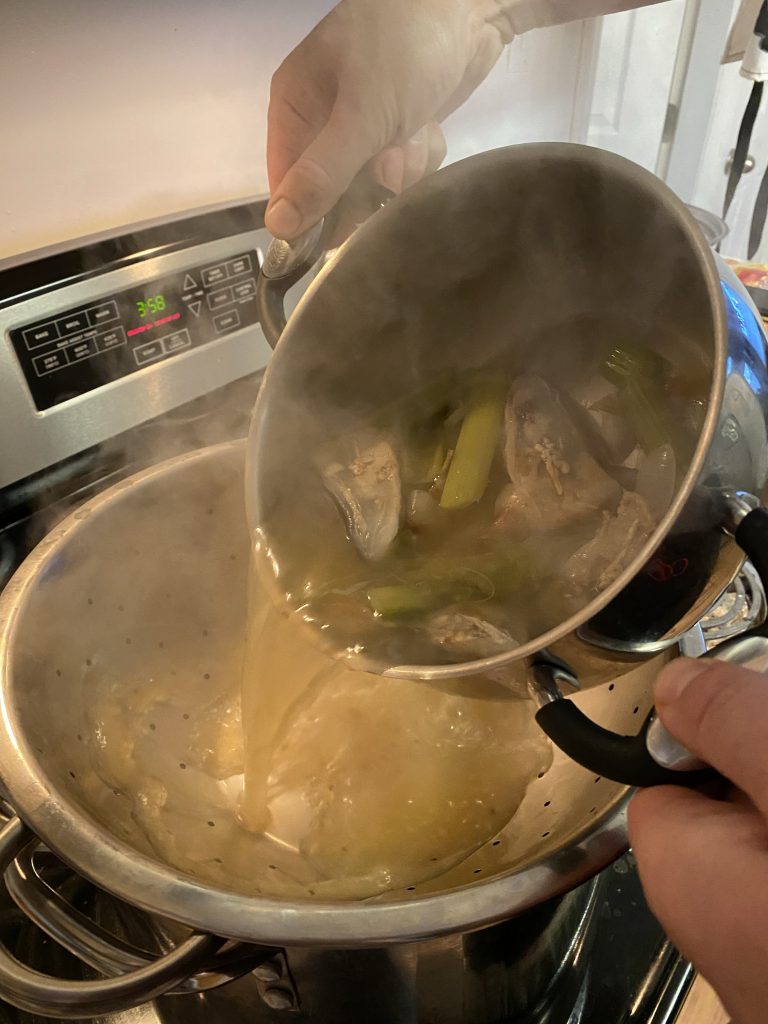

4. Once the potatoes are fully cooked, top up your pot with water until it is 3/4 full. Once the temperature has been brought up to a low boil again, add in your proteins (including the bacon). It doesn’t take much time at all to cook the clam, prawn, halibut and salmon, especially since they’re diced up into small bite size pieces. Bring to a low boil once again, and cook for 5-10 minutes, until all flavours are incorporated.
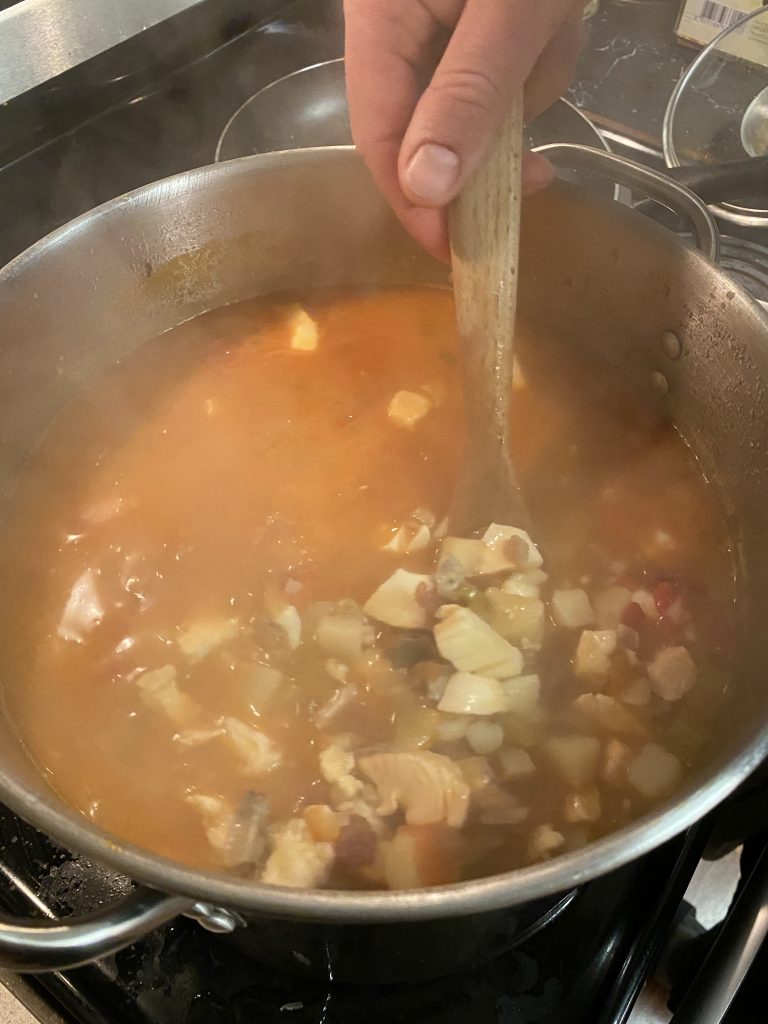
Once the meat is cooked, serve hot with buns or crackers! My favourite is premium plus crackers.
Last year, we made a brothy seafood chowder, but added smoked salmon instead of fresh spring salmon, and also added cockles. We found the smoked salmon and cockle flavours were too overpowering for the rest of the milder flavours. This year we left out the cockles and smoked salmon for this batch, and found the milder flavours of clam, prawn, halibut and spring salmon really complimented one another.
T’oyaxsut ‘nüün – thank you
Follow güüdisk on Instagram for more harvesting stories!
S&L – January 1, 2022